A Quick Look at Psalm 109

First, go ahead and take a few minutes to read through Psalm 109. I think you will get a lot more out of this if you have it fresh in your mind.

Psalm 109 is perhaps one of the most disturbing and violent psalms in the whole Psalter. At first glance, verses 6-19 appear to an extended request from David to see the absolute denigration, pain, and destruction of his enemy along with their family members. For those of us who value Jesus’s command to “bless those who curse you,” this is a difficult psalm to accept, and not to mention a difficult psalm to pray!

Continue reading “A Quick Look at Psalm 109”

The Meaning of Life

Photo credit Ravi Roshan

“Life” is a strange word if you start to pick it apart. 

On the one hand you use it to talk about a quality that belongs to things that are neither dead nor inorganic. This is the biological sense of the word. Things that have the incredible internal ability to grow, metabolize, reproduce themselves, and adapt to their environment have life and are alive. 

Continue reading “The Meaning of Life”

Faith is Trusting Jesus and His Work

The Doubting Thomas, Albrecht Dürer, 1510

Is it ever okay for a Christian to have doubt? Can you question and struggle with your faith and still be a good Christian?

I think there are two common ways of approaching this question that are unhelpful.

Continue reading “Faith is Trusting Jesus and His Work”

Do Not Doubt But Believe

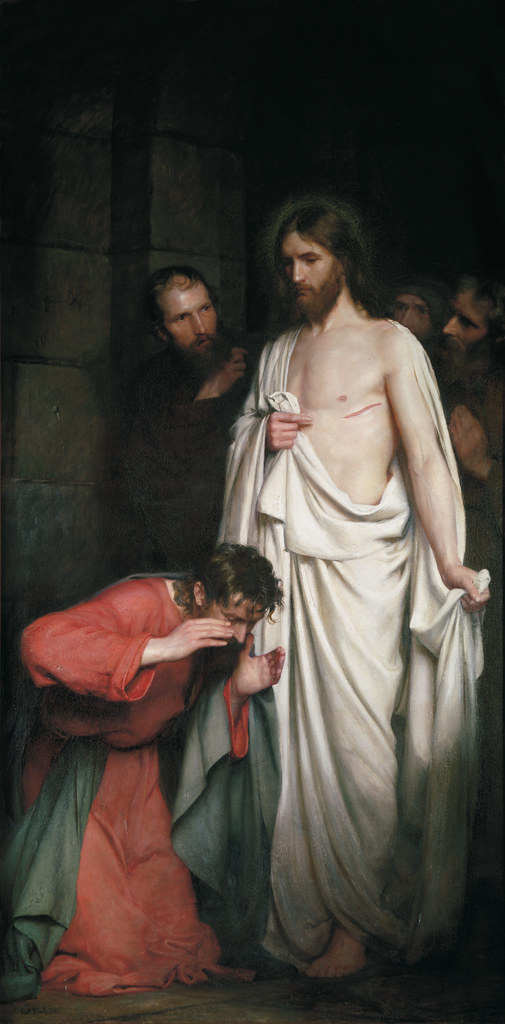
The Doubting Thomas, Carl Heinrich Bloch 1882

Thomas, Doubting Thomas. Forever remembered in the Gospel of John as the disciple who refused to believe that his teacher Jesus had risen from the dead.

Why? Simple: the dead do not come back to life. Everyone dies and they are gone forever. Things break and they don’t come back together again.    

Continue reading “Do Not Doubt But Believe”

There Is Only Either Logos Or Chaos

Rosa Celeste: Dante and Beatrice gaze upon the highest Heaven; from Gustave Doré’s illustrations to the Divine Comedy, 19th cent.

Lately, I have been reading through philosopher Peter van Inwagen’s book Metaphysics. (Metaphysics is a fancy word that describes a branch of philosophy that asks about the ultimate nature of reality.) He has a chapter where he asks whether human beings have a purpose or not—really, whether anything has a purpose or not, which is one of the quintessential questions people have been asking for millennia.

What are we here for?

Continue reading “There Is Only Either Logos Or Chaos”

The Bible’s First Love Story

Abrahams Opfer by Adi Holzer, 1997

It is the first love story in the Bible.

Abraham entwines his fingers in his son’s hair as he grasps it, drawing back the young man’s head, baring his neck.

Isaac lies on the makeshift altar, bound tightly, silent, sweating, breathing deeply. He is young. His skin is tight and smooth—hardly a quarter century old and not yet showing the signs of age.

So young, yet it is time for him to die. His blood will wet and stain the altar. It will smell like copper.  

Continue reading “The Bible’s First Love Story”

Can You Trust the Witness of the Gospels? Craig Keener and Christobiography

The Incredulity of Saint Thomas, Caravaggio, 1601

This post is for those who are skeptical or curious about the historical reliability of the Gospels (as well as those who might be curious to learn a little more about me).

I’ve tried to keep it concise, readable, and interesting for anyone who had ever pondered such a question.

Personal Prelude

I’ve never been one to just take what people tell me at face value.

I don’t think it’s really that I’m a skeptic; it’s just that, to me, it seems like a lot of people haven’t really thought through the things they believe very well.

Personally, I can’t really believe people who don’t have a good reason for what they believe, and I’ve always disliked it when people give me the textbook answer rather than a conclusion that they’ve arrived at through careful study and thought.

Continue reading “Can You Trust the Witness of the Gospels? Craig Keener and Christobiography”

Reflections on Love: Four Principles from Herbert’s Love (III)

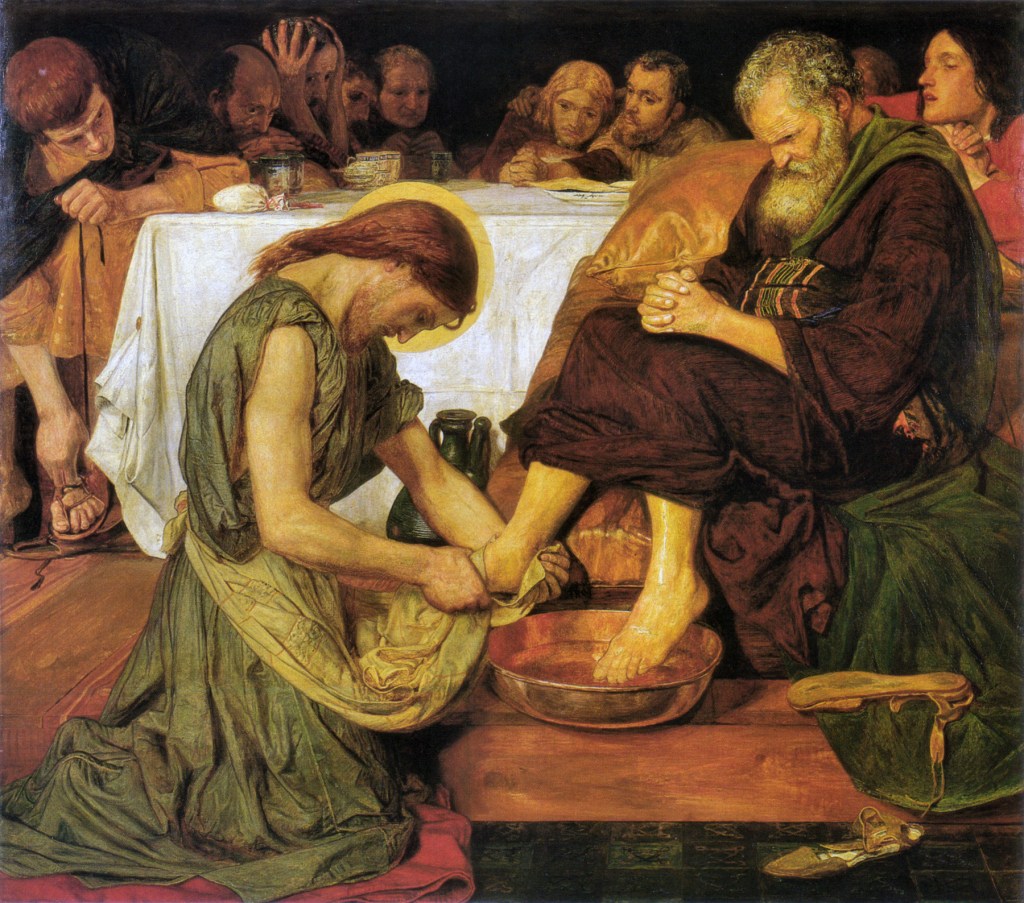
Jesus Washing Peter’s Feet, Ford Madox Brown, 1876

This post is part of a series. Click the link for Parts 1 & 2.

Last time I introduced you to Herbert’s poem “Love (III),” and invited you into it—to meet the loving Jesus Christ who Herbert would like to introduce you to.

Here I want to draw a few principles from it about God and God’s love. These four principles don’t exhaust the treasure to be found in the poem, but they do help distill its essence.

Hopefully, in doing so, you can carry these principles into your entire life—certainly your worship and prayer life, but not only there! God wants your entire life, from waking to sleeping, to be permeated by his love.  

So here we go:

Continue reading “Reflections on Love: Four Principles from Herbert’s Love (III)”

Reflections on Love: Being Loved by God, or Love (III) by George Herbert

Jesus Washing Peter’s Feet, Ford Madox Brown, 1876

This post is part of a series. To see Part 1, click here.

“Love (III)” is one of my favorite poems because it speaks to the heart of the matter: what does it look like to be loved by God? Composed by George Herbert in the 17th century, it is his most celebrated poem. It also concludes the main section of The Temple, the collection of Herbert’s English poems.

Here is the poem in full (it belongs to the public domain), with the spelling modernized:

Continue reading “Reflections on Love: Being Loved by God, or Love (III) by George Herbert”

Reflections on Love: Why Does It Even Matter?

Jesus Washing Peter’s Feet, Ford Madox Brown, 1876

This blog post started as a reflection on a poem, but it started to get pretty long. I realized I didn’t want to test everyone’s attention span, so I decided to split it up into a series that will attempt to unfold what love means for those who follow Christ.

Christians talk a lot about love. They claim that God loves them.

One early writer says that God has given Christians a new life because God’s love for them was so strong. Elsewhere, he writes that God’s love is so powerful and large that nothing can overcome or overpower it. Nothing is bigger or stronger than it (Eph 2:4-5; Rom 8:38-39).

Continue reading “Reflections on Love: Why Does It Even Matter?”