
The problem of evil and suffering has been and continues to be one of the most important theological questions of the past century. The savage destruction of the two World Wars brought to an end Europe’s naive optimism regarding human progress, and the suffering they unleashed caused the West to question the existence of God, to wonder whether a world in which so much carnage could be wrought could really have a benevolent Deity over it. The question is still relevant today, with Barna reporting that for GenZers the problem of suffering is in the top three barriers to faith.
This problem has shaped much theology of the past one hundred years, and one of the main ventures of modern theology has been to construe the God of the Bible as a God who suffers in his divine essence. (Suffice it to say that this is quite a different route than Christian theology had taken for the past almost two millennia.)
I’ve thought about the problem of evil and suffering quite a bit over the years, and I’ve come to the conclusion that while it is surely a problem, there is no problem of evil and suffering. To elaborate, evil and suffering are a problem in the world, but I don’t believe that they are problems that put God in the docket, as the modern use of the term conveys. Rather, it’s the other way around, as it often is, that rather than finding fault in another we should first find the fault in ourselves.
The first question to ask, which is not often asked, is whether suffering is in itself bad or evil. By “suffering” I mean to undergo anything unpleasant. And the answer to this is an obvious no: not all suffering is bad. In fact, one must certainly conclude that there is much suffering that is good. This was recognized by the ancients. For example, the Greeks had a saying “mathein pathein,” “to suffer is to grow.” All self-improvement and growth requires some sort of suffering. And it is often the case that the most profound wisdom and insights into life come through deep suffering. Certain virtues, like courage, can only be exhibited under hardship. Moreover, modern psychologists recognize what is called “post traumatic growth,” which is a positive outcome of trauma that leads to personal development. In a sense, growth redeems suffering. Though, I am more tempted to say that growth is the proper end of suffering.
If not all suffering is bad, we can nevertheless be certain that there is bad suffering, which is meaningless suffering. Suffering from which there comes no growth, no redemption. What makes suffering meaningless is a deeply personal matter. It seems to me that the ability to give meaning to suffering is in some sense a skill, capability, and even a choice. When a person undergoes suffering, they are the one who must transmute it into meaning.
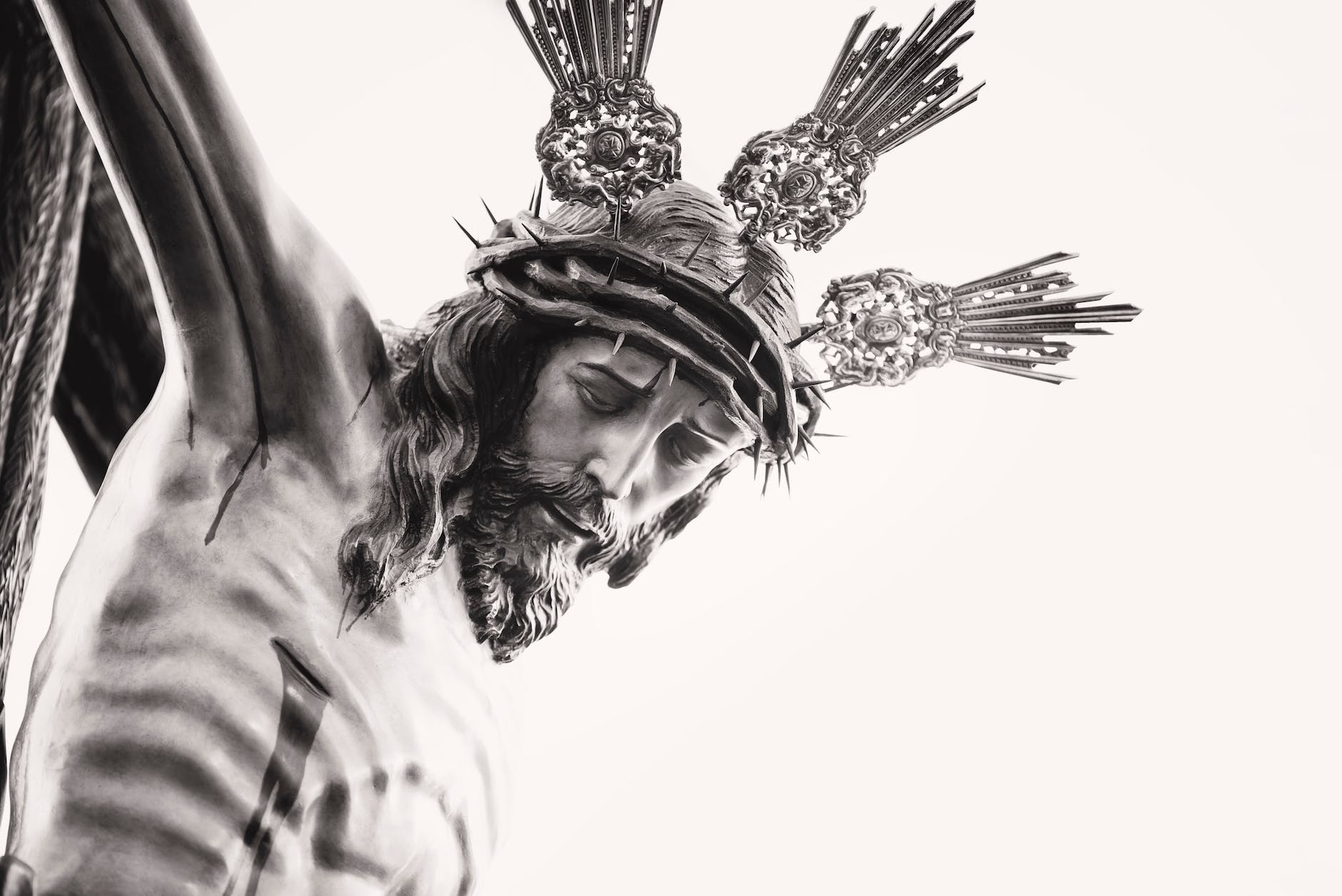
The Passion of Christ shows that there is not a limit at which suffering becomes meaningless, as though too much suffering automatically becomes meaningless suffering. Christ bore the utmost suffering and was able to transmute it into life for the world. The question is, is your soul big enough to change suffering into meaning and life? The lives of the saints are examples for us of people who have walked this path.
The question one must ask then is why do people have to undergo suffering which they are incapable of bearing. It seems unfair. I think here we must come back to original sin. It can’t be a coincidence that the modern world that has put God on the stand is also the one which vehemently rejected the doctrine of original sin during the so-called Enlightenment. I am not here committed to any specific construal of the doctrine but that in some sense we are all cut off from our Source. And because of this we are weaker and frailer than we were made to be.
God made the world with a specific “density of suffering.” We have both increased this density through our sin, and we have also become weaker in the face of it, also because of sin. Considering only the latter point, we have become too weak to bear the suffering that God built in as a good aspect of the world. This phenomenon is perhaps what we mean when we talk about tragedy. In a sense, the lives of the saints aren’t examples of extraordinary human beings. Rather, it’s our “ordinary” lives that fall far below the bar of what we were meant to be.
Simone Weil may be an example of someone who has been able to live a life that fearlessly transforms suffering into meaning. Not only was she one of the most brilliant people of her generation, she lived in a compelling way. She took on suffering willingly, courageously, and gave it meaning: “Unless one has placed oneself on the side of the oppressed to feel with them, one cannot understand.” Though there are some questions surrounding her death, it seems she died at the age of 34 because, in an act of solidarity and compassion, she was unwilling herself to eat more food than what she believed her compatriots in German-occupied France were able to eat. Even though she died young, and in a sense “unnecessarily,” there is perhaps very little that is tragic about her death. She lived out her convictions courageously and owned her fate.
While this perhaps hardly begins to answer all questions about suffering and evil, I think it at least gives a necessary reframing of the question. Not all suffering is bad. Perhaps these are words that in our happiness-centered, consumeristic lifestyles we don’t want to hear. We don’t want to hear that becoming a truly happy person isn’t something that comes easily or naturally. It’s not something that can be bought, and it’s not something that can be created merely through systemic restructuring of society (though that can of course help; that’s what culture is all about). Rather, it’s something that requires a lot of hard work and growth, a lot of suffering.

 cruciformatio